Chapter 1 · The River That Grew a Country
Imagine a country that is almost all desert — hot, dry sand as far as you can see. Nothing grows there. Nobody could farm it. And yet, right down the middle of that desert, ancient Egypt became one of the greatest civilizations the world has ever known.
How? One word: the Nile. The Nile is a giant river that runs the whole length of Egypt. Every single year, far away in the mountains of the Ethiopian Highlands, heavy rains would swell the river until it spilled over its banks and spread across the land. The Egyptians called this the inundation — the great flood.
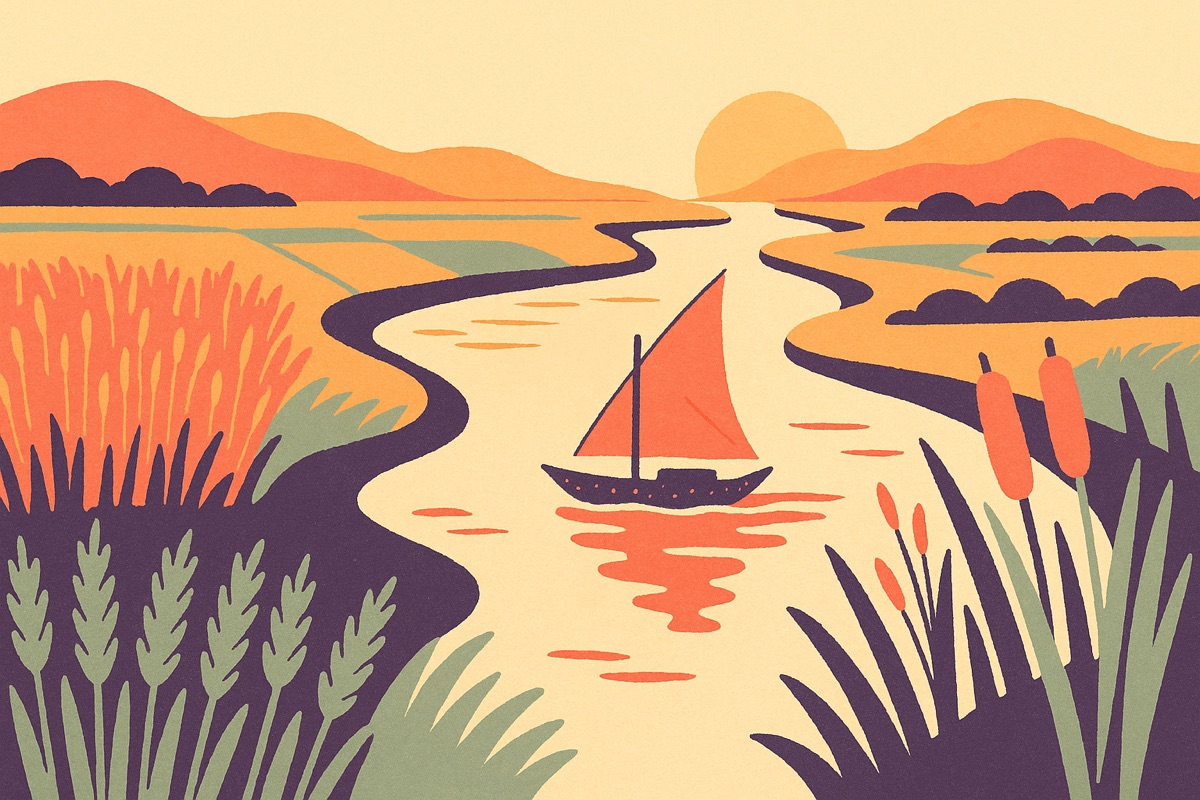
When the flood pulled back, it left behind something magical: a layer of dark, sticky mud. This mud was packed with everything plants love. Suddenly the dry sand became soil so rich that farmers could grow wheat, barley, fruit and vegetables in it. The Egyptians even named their country after it — Kemet, which means “the Black Land,” after that dark, life-giving mud. They called the empty desert around it Deshret, “the Red Land.”
Chapter 2 · A Flood Worth Cheering For
Here’s the surprising part. Most people are afraid of floods. The Egyptians threw a party for theirs.
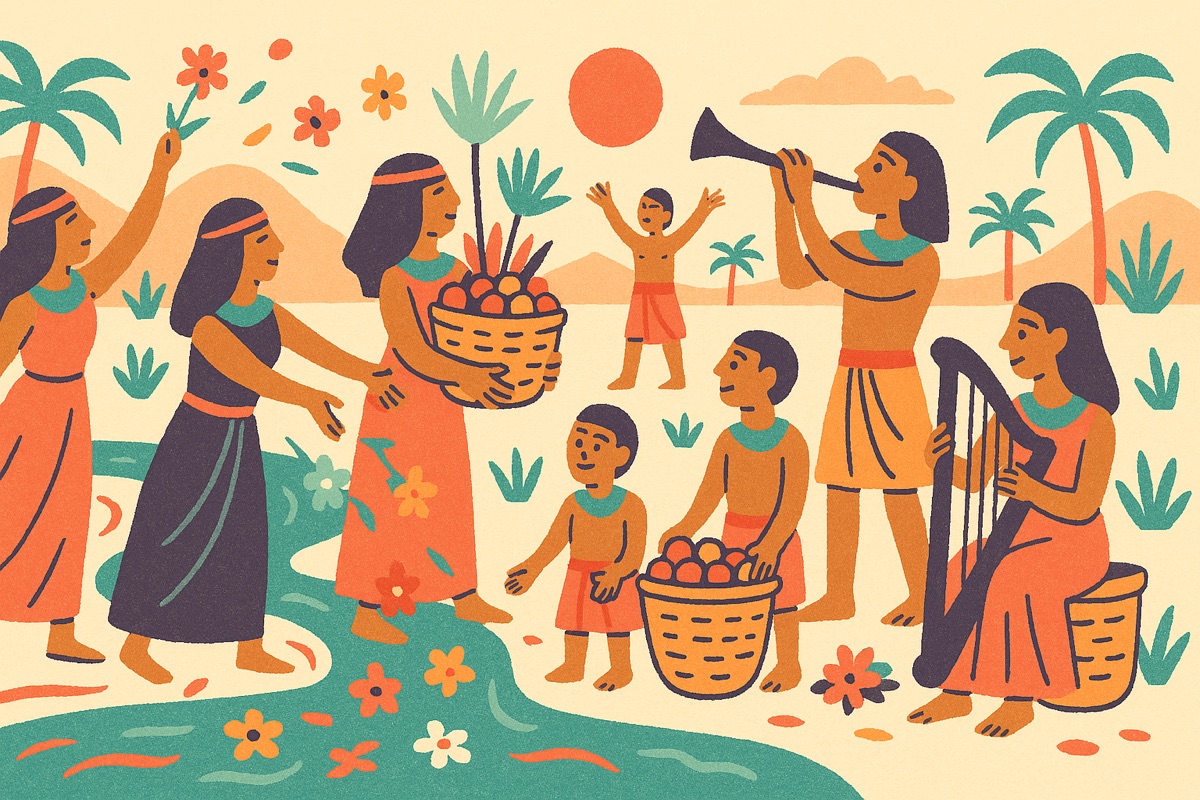
They knew the flood was the reason they could eat. So when the water began to rise, they held the Festival of the Inundation — with music, dancing, feasts, and offerings of flowers and food thrown into the river to say thank you. They even honored a god of the flood named Hapi. Their whole calendar began with flood season. To an Egyptian, the flood wasn’t a disaster. It was the best time of the year.
The Egyptians didn’t want a huge flood — just a “perfect” one. Too little water meant hungry years; too much could wash away their mud-brick houses. So they built special measuring wells called Nilometers to watch the water and guess how good the harvest would be!
Keep reading with Emma
You’ve met the Nile. Next: who really built the pyramids, how mummies were made, the secret of hieroglyphs, and the boy king. Sign up — Emma will read it with you and remember where you left off.
Sign up to keep reading ▸No credit card · Made for ages 7–13
- 🏗️ The truth about who built the pyramids
- 🧻 How a mummy was really made (in 70 days!)
- 🔤 How we cracked the code of hieroglyphs
- 🐱 Why Egyptians treated cats like royalty